A damaged tooth can affect more than just your smile. Cracks, fractures, large fillings, and severe wear can make it difficult to chew comfortably and may increase the risk of further dental complications. Dental crowns are one of the most effective restorative treatments available, helping strengthen weakened teeth while restoring their appearance and function. Modern crowns are designed to blend naturally with surrounding teeth, making them a reliable solution for both functional and cosmetic concerns. Understanding how dental crowns work and when they may be recommended can help you make informed decisions about your oral health. By protecting vulnerable teeth and restoring their strength, dental crowns can often help patients avoid more extensive dental treatment in the future. They are a long-lasting solution for many common dental concerns. If you are dealing with a damaged tooth, professional treatment can help protect your smile and prevent more extensive problems in the future.
WHEN A DENTAL CROWN MAY BE RECOMMENDED
Dental crowns are often recommended when a tooth has been damaged to the point where a filling alone is no longer sufficient. While fillings work well for small areas of decay or minor damage, larger structural issues may require additional support to protect the tooth from breaking further.
One of the most common reasons for a dental crown is a cracked or fractured tooth. Even a small crack can weaken the tooth and make it vulnerable to further damage during normal chewing. A crown covers the entire visible portion of the tooth, helping distribute biting forces more evenly and reducing the risk of additional fractures.
Crowns are also frequently used after root canal treatment. Once a tooth has undergone a root canal, it can become more brittle because the inner pulp has been removed. A crown helps reinforce the remaining tooth structure and protects it from future damage.
Other situations where a crown may be recommended include:
By addressing structural problems early, crowns can help preserve natural teeth and prevent the need for more extensive treatment later.
HOW DENTAL CROWNS RESTORE STRENGTH AND OVERALL FUNCTION
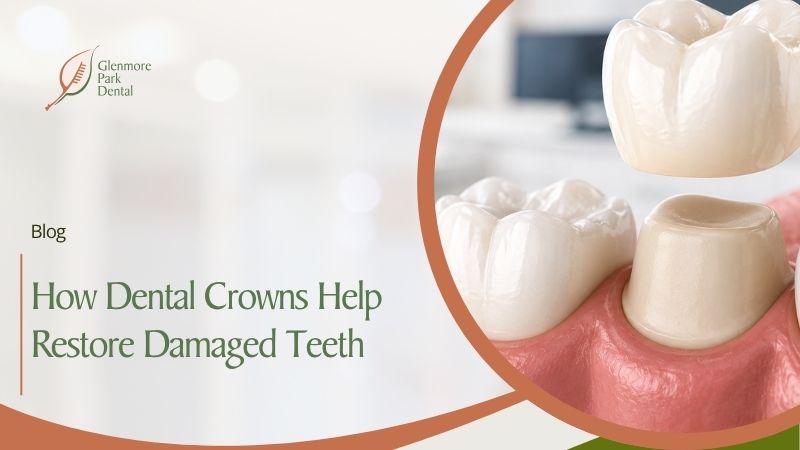
A dental crown acts like a protective cap that covers the entire visible portion of a damaged tooth. This design allows the crown to restore the tooth's shape, size, and strength while maintaining a natural appearance.
One of the biggest benefits of a crown is its ability to reinforce weakened tooth structure. Instead of placing stress on damaged areas, the crown helps absorb and distribute chewing forces across the entire tooth. This added support can significantly improve comfort and function.
Modern dental crowns are available in a variety of materials, including porcelain and ceramic options that closely resemble natural tooth enamel. These materials allow crowns to blend seamlessly with surrounding teeth while providing the durability needed for everyday use.
The treatment process typically involves preparing the tooth, taking impressions, and creating a custom restoration designed specifically for the patient. Once the final crown is placed, it is securely bonded to the tooth to create a strong and stable result.
Patients often notice improvements in several areas after receiving a crown:
With proper care, dental crowns can provide reliable support for many years while helping maintain overall oral health.
BENEFITS OF TREATING DAMAGED TEETH EARLY
When a tooth becomes damaged, delaying treatment can allow the problem to worsen over time. Small cracks may expand, weakened teeth can fracture further, and untreated damage may eventually affect the inner structures of the tooth.
One of the primary advantages of receiving a dental crown early is preserving as much natural tooth structure as possible. Addressing the issue before severe damage occurs often results in a more straightforward treatment process and can help avoid additional procedures.
Early treatment can also improve comfort. Damaged teeth may cause discomfort when chewing, sensitivity to temperature changes, or irritation that affects daily activities. A crown helps stabilize the tooth and reduce these symptoms.
Another important benefit is long-term protection. By covering vulnerable areas, a crown acts as a barrier against future wear, decay, and structural damage. This protection can help extend the lifespan of the natural tooth and reduce the likelihood of needing more extensive restorative treatment in the future.
Maintaining oral health is often easier when damaged teeth are treated promptly. Restoring proper function helps patients eat a balanced diet, maintain good oral hygiene, and avoid complications that could affect surrounding teeth.
Taking action early allows patients to protect their smiles while preserving comfort, function, and confidence.
Dental crowns are an effective way to restore damaged teeth while protecting them from further wear and fracture. Whether a tooth has been weakened by decay, injury, a large filling, or a root canal, a custom crown can help restore strength, function, and appearance. Addressing damage early often leads to better long-term outcomes and helps preserve your natural smile.
At Glenmore Park Dental, we provide customized restorative solutions designed to protect your oral health and support long-term comfort. If you have a damaged or weakened tooth, contact our team today to schedule an appointment and learn whether a dental crown may be the right solution for you.
The lifespan of a dental crown depends on factors such as oral hygiene habits, diet, and overall dental health. Many crowns last ten years or longer when properly cared for. Regular dental examinations and good home care play an important role in helping crowns remain functional and attractive for many years.
The dental crown procedure is typically comfortable. Local anesthetic is used during treatment to ensure the area is numb while the tooth is prepared. Some mild sensitivity may occur after treatment, but most patients return to normal activities shortly afterward. Your dental team can provide recommendations to help manage any temporary discomfort.
Yes. Modern crowns are designed to closely match the colour, shape, and appearance of natural teeth. Materials such as porcelain and ceramic provide highly aesthetic results, allowing crowns to blend seamlessly with surrounding teeth. Many people are unable to tell the difference between a well-made crown and a natural tooth.
Have a question about your dental health or ready to book an appointment? Our friendly team is here to help! Fill out the form below, and we’ll get back to you as soon as possible.

Glenmore Park Dental—Trusted Family Dentist in Calgary.
Since 2001, we’ve been Calgary’s trusted choice for general dentistry, implants, Invisalign, and advanced treatments like biofilm removal and Zoom whitening. With a warm, welcoming atmosphere and a commitment to patient comfort, we make every visit stress-free. Conveniently located for easy access from Glenmore and Crowchild, we proudly serve families across Marda Loop, Acadia, Lakeview, Glenbrook, and beyond.
Book your appointment today and smile with confidence!