Gum disease often develops without pain, which means many people do not realize there is a problem until it has progressed. Gum disease is common, but the earliest stage, gingivitis, can often be reversed with professional cleanings and good daily habits. Knowing the early warning signs, such as bleeding gums, swelling, persistent bad breath, or receding gums, can help you act before the condition affects the bone that supports your teeth. Regular exams allow your dentist to spot changes early and recommend the right level of care. Understanding what can and cannot be reversed, and how gum disease is treated, can help you take a proactive approach to protecting your smile. Contact Glenmore Park Dental to schedule an exam and learn more about caring for gum disease at every stage.
CAN GUM DISEASE BE REVERSED?
Gum disease is one of the most common oral health conditions, and many people have it without realizing. Because the early stages are often painless, gum disease can progress quietly for months or even years before it becomes obvious. That is why so many patients are surprised when their dentist points it out during a routine exam.
Whether gum disease can be reversed depends largely on how far it has progressed. In its earliest stage, known as gingivitis, the inflammation is limited to the gums. It is usually caused by plaque, a sticky film of bacteria that builds up along the gumline. At this stage, the condition can often be reversed with a professional cleaning and consistent daily home care, and the gums can return to a healthy state.
If plaque is not removed, it can harden into tartar, which cannot be brushed away. Over time, the bacteria can irritate the gums more deeply and the condition may progress to periodontitis. At this stage, the infection extends below the gumline and can affect the ligaments and bone that support the teeth.
Damage to the supporting bone is generally not reversible. However, periodontitis can often be managed, and its progression can be slowed or stopped with professional treatment and ongoing care. This is why catching gum disease early makes such a difference.
The stages of gum disease include:
Anyone can develop gum disease, but some factors may increase the risk. These can include tobacco use, diabetes, hormonal changes, family history, and certain medications that cause dry mouth. Difficulty cleaning thoroughly along the gumline can also play a role. A dental exam can help determine which factors may apply to you.
It is also worth knowing that gum health and overall health can be connected. Conditions such as diabetes may make gum disease more likely, and gum inflammation may make blood sugar harder to manage. If you have a medical condition, it is a good idea to let your dental team know.
EARLY SIGNS OF GUM DISEASE YOU SHOULD NEVER IGNORE
Healthy gums are firm, pink, and do not bleed during normal brushing and flossing. When something changes, your gums are often the first place it shows. Recognizing the early signs gives you the best chance of reversing the problem before it causes lasting damage.
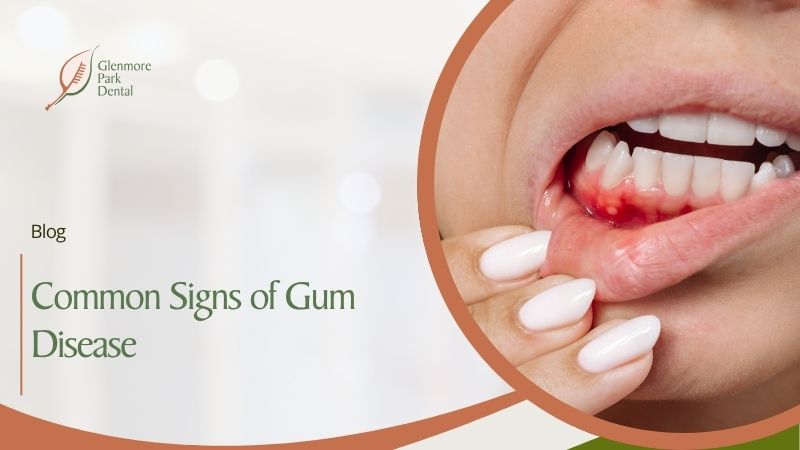
Bleeding is one of the most common warning signs. Many people assume that bleeding gums are simply the result of brushing too hard, and while aggressive brushing can irritate the gums, regular bleeding should not be treated as normal. It is often a sign of inflammation caused by plaque buildup.
Red, swollen, or tender gums are another indicator. Healthy gum tissue fits snugly around each tooth. When gums become puffy, shiny, or sore to the touch, it may mean bacteria are irritating the tissue.
Persistent bad breath or an unpleasant taste that does not go away with brushing can also be a warning sign. The bacteria involved in gum disease release compounds that can cause ongoing odor.
Signs that deserve attention include:
Gum recession is a sign many people overlook. If your teeth appear longer than they used to, or you notice sensitivity near the gumline, the gums may be pulling away from the teeth. Receding gums can expose the roots, which are more sensitive and more vulnerable to decay.
In more advanced cases, patients may notice pus around the teeth, pain when chewing, teeth that feel loose, or changes in the way the teeth fit together. These signs suggest that the supporting structures may be affected and should be assessed as soon as possible.
The challenge is that gum disease is often painless. Waiting for pain before booking an appointment can mean the condition has already advanced. During a routine exam, your dentist can check for early changes by looking at the gums, measuring the small spaces between the teeth and gums, and taking X-rays when appropriate to assess the bone that supports your teeth.
HOW GUM DISEASE IS TREATED AND HOW TO PROTECT YOUR GUMS
Treatment depends on how advanced the condition is. For early gum inflammation, a thorough professional cleaning to remove plaque and tartar, combined with better daily habits at home, is often enough to bring the gums back to health.
When tartar and bacteria have built up below the gumline, a deeper cleaning may be recommended. Often called scaling and root planing, this treatment cleans the surfaces of the tooth roots to remove bacteria and buildup, helping the gums heal and reattach more closely to the teeth. The right approach for you will depend on what your dentist finds during your assessment.
After treatment, ongoing maintenance is important. Patients who have had gum disease may benefit from more frequent cleanings, so any signs of recurrence can be caught early. Gum disease can return if plaque is allowed to build up again, so regular follow-up plays a key role in keeping it under control.
Daily habits make a real difference. Brushing twice a day with a soft toothbrush, cleaning between the teeth every day, and paying attention to the gumline can help keep plaque from building up. Your dental team can show you techniques and tools that work well for your mouth.
Habits that support healthy gums include:
If your gums bleed when you clean them, try not to stop. Skipping brushing or flossing allows more plaque to build up, which can make the inflammation worse. Gentle, consistent cleaning, along with a professional assessment, is usually the better approach. If the bleeding continues after a week or two of careful cleaning, it is time to book an exam.
Lifestyle choices matter too. Quitting tobacco, managing conditions like diabetes, and eating a balanced diet can all support healthier gums and help your body respond to treatment.
Regular checkups remain one of the best ways to protect your gums. Routine exams and cleanings allow your dentist to spot early changes long before you would notice them yourself, and to act while the condition is still reversible.
If you have noticed bleeding gums, persistent bad breath, or any of the other signs described here, do not wait for pain to appear. Contact Glenmore Park Dental today to schedule an exam and learn more about gum disease care that can help you protect your gums, your teeth, and your smile.
Yes. Bleeding when you brush or floss is one of the most common early signs of gum inflammation, usually caused by plaque along the gumline. Occasional bleeding can come from brushing too hard, but regular bleeding should not be ignored. If it continues after a week or two of gentle, consistent cleaning, it is a good idea to book an exam.
No, and that is why it is easy to miss. Early gum disease is often painless, so many people do not realize they have it until a dental exam. Waiting for pain can mean the condition has already advanced, which is why regular checkups matter.
It depends on how advanced it is. Early inflammation is often managed with a professional cleaning and better daily home care. If bacteria and tartar have built up below the gumline, a deeper cleaning called scaling and root planing may be recommended. Your dentist will explain the right approach after an assessment.
Have a question about your dental health or ready to book an appointment? Our friendly team is here to help! Fill out the form below, and we’ll get back to you as soon as possible.

Glenmore Park Dental—Trusted Family Dentist in Calgary.
Since 2001, we’ve been Calgary’s trusted choice for general dentistry, implants, Invisalign, and advanced treatments like biofilm removal and Zoom whitening. With a warm, welcoming atmosphere and a commitment to patient comfort, we make every visit stress-free. Conveniently located for easy access from Glenmore and Crowchild, we proudly serve families across Marda Loop, Acadia, Lakeview, Glenbrook, and beyond.
Book your appointment today and smile with confidence!