An oral cancer screening is a quick, non-invasive examination that can play an important role in protecting your overall health. While many people associate dental visits with cleaning teeth and checking for cavities, dentists also look for early signs of oral cancer during routine exams. Detecting abnormalities early often leads to more treatment options and significantly better outcomes. Oral cancer can develop without causing pain or noticeable symptoms in its earliest stages, making regular screenings especially valuable. At Glenmore Park Dental, we provide oral cancer screenings as part of comprehensive dental examinations for patients throughout Marda Loop, Lakeview, Glenbrook, Glenmorgan, and Acadia. Understanding what happens during an oral cancer screening can help you feel confident during your visit and recognize why this simple examination is an essential part of maintaining your long-term health. Even if you feel completely healthy, regular screenings provide peace of mind and can help identify concerns before they become more difficult to treat.
WHY SCREENINGS FOR CANCER ARE SO IMPORTANT
Oral cancer can affect the lips, tongue, cheeks, floor of the mouth, roof of the mouth, gums, throat, and other soft tissues inside the oral cavity. Like many forms of cancer, it is often much easier to treat when detected early. Unfortunately, early-stage oral cancer frequently causes little to no discomfort, meaning many people are unaware that anything is wrong.
Because dentists regularly examine the mouth, they are often among the first healthcare professionals to notice changes that may require further investigation. Even small abnormalities that seem harmless can sometimes indicate the earliest stages of disease.
Several factors may increase a person's risk of developing oral cancer, including:
However, it is important to understand that oral cancer does not only affect people with known risk factors. Many individuals diagnosed with oral cancer have no obvious lifestyle risks, which is why routine screenings are recommended for adults during regular dental examinations.
Knowing what is normal for your mouth also helps. If you notice any sore, ulcer, lump, or patch that has not healed within two weeks, it should be evaluated by a dental professional.
WHAT YOUR DENTIST LOOKS FOR DURING THE SCREENING
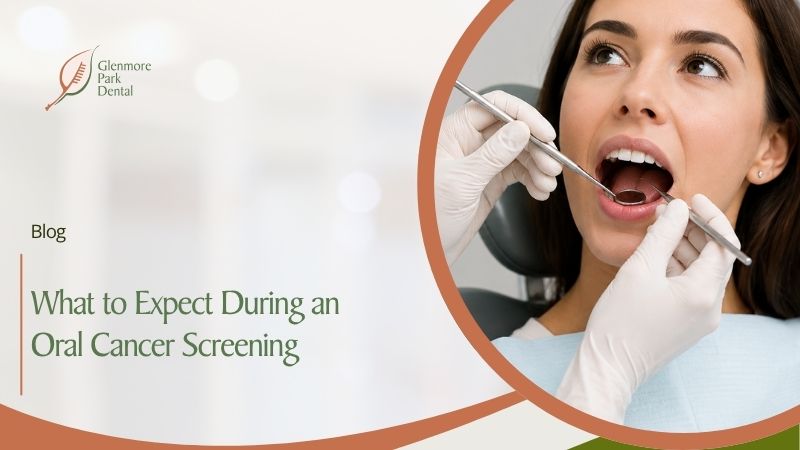
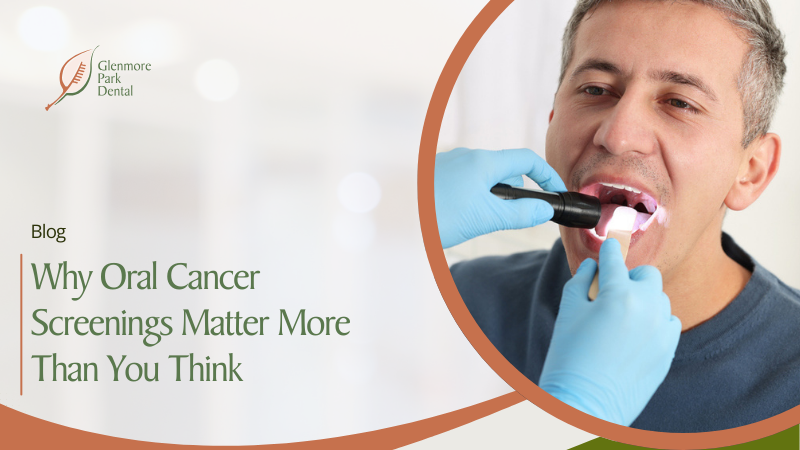
An oral cancer screening is painless and typically takes only a few minutes. No needles, special preparation, or recovery time are required.
Your dentist begins by visually examining the soft tissues throughout your mouth. They are looking for any unusual changes that differ from healthy tissue, including:
The examination extends beyond the teeth and gums. Your dentist carefully checks the:
In addition to the visual examination, your dentist will gently feel certain areas around your mouth, jaw, and neck. This allows them to identify enlarged lymph nodes, firm masses, or other abnormalities that may not be visible.
They may also ask whether you've experienced symptoms such as:
Many patients are surprised by how thorough yet comfortable the screening is. Because it is incorporated into your routine dental examination, there is usually very little additional time required.
If your dentist notices an area that appears unusual, it does not automatically mean cancer is present. Many changes inside the mouth are caused by irritation, infections, trauma, or other non-cancerous conditions. However, monitoring the area or referring you for additional evaluation helps ensure that potentially serious conditions are not overlooked.
HOW REGULAR SCREENINGS HELP PROTECT YOUR HEALTH
Routine oral cancer screenings are one of the simplest ways to monitor changes that might otherwise go unnoticed. Since many dental patients visit their dentist more often than their physician, regular dental appointments provide valuable opportunities for early detection.
When oral cancer is identified in its early stages, treatment is often less extensive and survival rates are significantly higher than when the disease is diagnosed later.
Beyond identifying possible cancer, screenings may also detect other conditions affecting the soft tissues of the mouth, including:
This makes oral cancer screening an important part of preventive dentistry rather than a separate procedure performed only for high-risk patients.
You can also lower your risk of oral cancer by maintaining healthy habits such as:
Even if you brush and floss every day, soft tissue diseases cannot always be prevented through oral hygiene alone. Regular professional examinations provide another layer of protection by identifying changes before symptoms become severe.
Oral cancer screenings are a simple yet valuable part of routine dental care. They allow your dentist to examine the soft tissues of your mouth for changes that may require further attention, often before pain or other symptoms develop. Because early detection can significantly improve treatment outcomes, regular screenings should be an important part of every preventive dental visit.
At Glenmore Park Dental, we provide comprehensive oral cancer screenings as part of your routine dental examination for patients throughout Marda Loop, Lakeview, Glenbrook, Glenmorgan, Acadia, and surrounding Calgary communities. If it has been a while since your last dental exam, scheduling an appointment today can help protect both your oral health and your overall well-being.
Most adults should receive an oral cancer screening during their routine dental examinations, typically every six months. Your dentist may recommend more frequent screenings if you have certain risk factors, such as tobacco use, heavy alcohol consumption, or a previous history of oral cancer.
No. Oral cancer screenings are completely non-invasive and painless. Your dentist performs a visual examination of your mouth and gently feels certain areas around your jaw and neck to check for abnormalities. The examination usually takes only a few minutes.
Finding an abnormal area does not necessarily mean you have oral cancer. Many mouth lesions result from irritation, trauma, or infection. Your dentist may recommend monitoring the area, scheduling a follow-up appointment, or referring you to a specialist for further evaluation if additional testing is needed.
Have a question about your dental health or ready to book an appointment? Our friendly team is here to help! Fill out the form below, and we’ll get back to you as soon as possible.

Glenmore Park Dental—Trusted Family Dentist in Calgary.
Since 2001, we’ve been Calgary’s trusted choice for general dentistry, implants, Invisalign, and advanced treatments like biofilm removal and Zoom whitening. With a warm, welcoming atmosphere and a commitment to patient comfort, we make every visit stress-free. Conveniently located for easy access from Glenmore and Crowchild, we proudly serve families across Marda Loop, Acadia, Lakeview, Glenbrook, and beyond.
Book your appointment today and smile with confidence!